In this lecture and for sometime after I was working on two experiments. One involved a DSD tech hm-10, which is a component that allows you to interact with the Arduino using bluetooth. This is the circuit I created with help from Daniel Bowers.
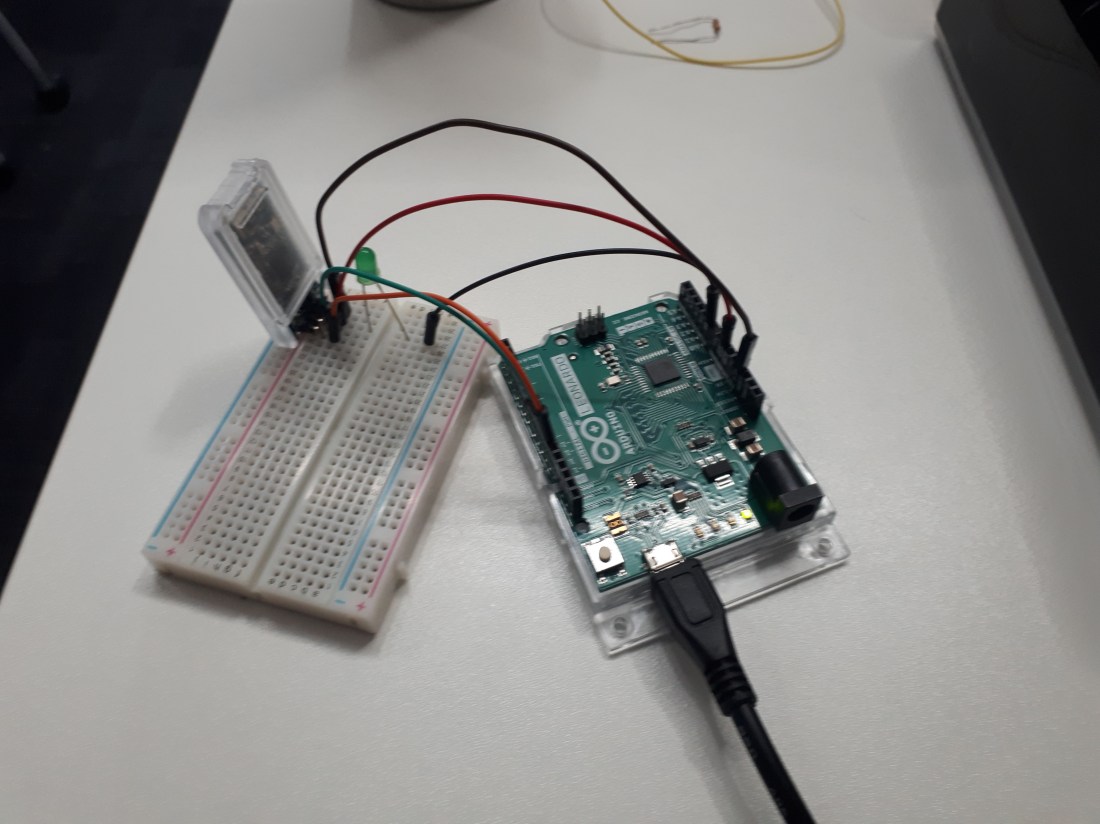
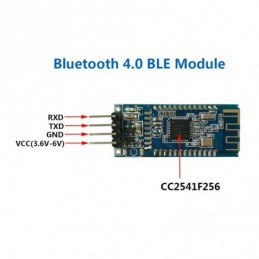
Like many other complicated components the DSD tech comes with a four node interface to work with our Arduino. There are ground, to complete the circuit, VX which takes power and two other pins. The RXD and TX pins are for receiving and transmitting. They act to transmit raw binary computer code along their band width which allows you to interact using blue tooth. The complication is that the RX of the Arduino must be connected to the TX of the DSD tech and vice versa.
I was able to turn an LED on and off using the DSD tech app…

Which produced this result…
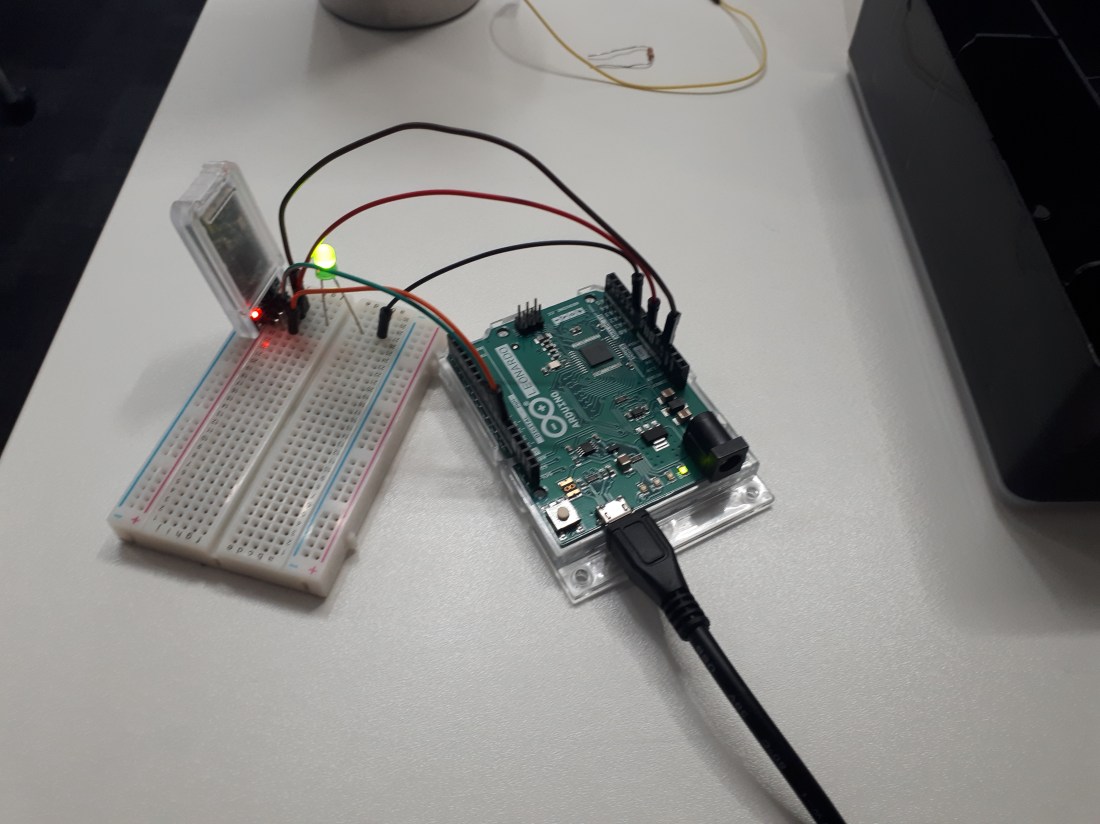
In fact I struggled with this experiment and spent a long time trying checking, making alterations and rewiring it to get it to work. In the end, Daniel Bowman used exactly the same set up of code and wiring but with his ‘Iphone’ and it worked.
This was disheartening but when it did work I was pleased and decided to leave it as it was. It’s important to stay committed and continue researching the solutions to problems like these so that you can get results but this time it seemed to be a problem outside of my grasp.
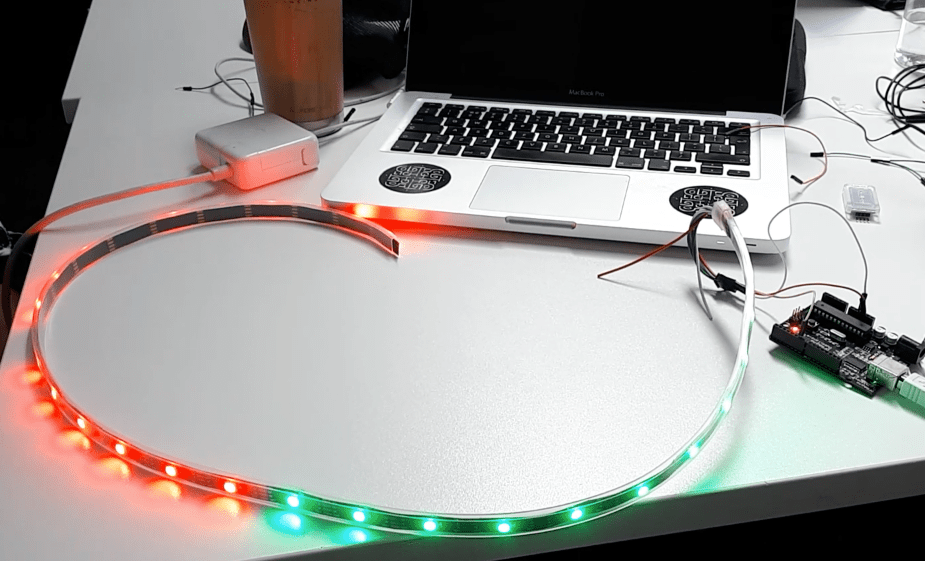
The second experiment I worked on was with a neon band where as a three person team we tried to get the decorative lighting to work and display patterns. In the end we we’re informed that the preparation of the component had been slightly mishandled and the neon band had been given its interfacing nodes at the output end where it should have been attached to the beginning to create a circuit. Once we changed the band we got it working like this…
This weeks progress was slow but I know from experience that its important to keep hopes up and persevere to get results.

 Physical Computing Experimentation